Most hosts spend hours perfecting the centerpiece, yet overlook the objects used most: the wine glasses. A closer look reveals a fundamental distinction-what’s in your guests’ hands drastically alters both the sensory experience and the elegance of the table. Crystal and glass, though often used interchangeably, belong to entirely different realms in craftsmanship, clarity, and presence. Understanding this difference isn’t just about luxury-it’s about intentionality at the table.
Essential characteristics of premium crystal stemware
What sets premium crystal stemware apart isn’t merely appearance-it’s physics. High-quality crystal contains carefully calibrated mineral additives, typically in the form of lead oxide or modern
lead-free alternatives like barium or potassium. These elements increase the density and refractive index of the glass, resulting in a signature brilliance. This enhanced light refraction creates a subtle rainbow effect when held to the light, distinguishing it from flat, everyday glass.
Another hallmark is resonance: tap the rim gently with a utensil, and true crystal emits a clear, sustained ring-a phenomenon absent in standard glass. This sonic quality is not just pleasing; it’s a testament to the material’s homogeneity and structural integrity. Equally significant is the possibility of extreme thinness. Thanks to its strength, crystal can be mouth-blown into delicate, feather-thin walls that enhance wine’s bouquet and texture without overwhelming the palate.
For those seeking the pinnacle of table decoration, selecting handcrafted wine glasses ensures a level of clarity and thinness that industrial glass simply cannot replicate. Each piece reflects centuries of mouth-blown technique, perfected by artisans who balance heat, breath, and precision. The result is a vessel that doesn’t just hold wine but elevates it-a silent participant in the art de vivre.
- Enhanced light refraction creates a prism-like sparkle
- Resonant "ring" indicates material purity and density
- Thinner rims heighten wine’s aromatic release
- Weight distribution provides balanced handling
- Handmade construction ensures unique, organic symmetry
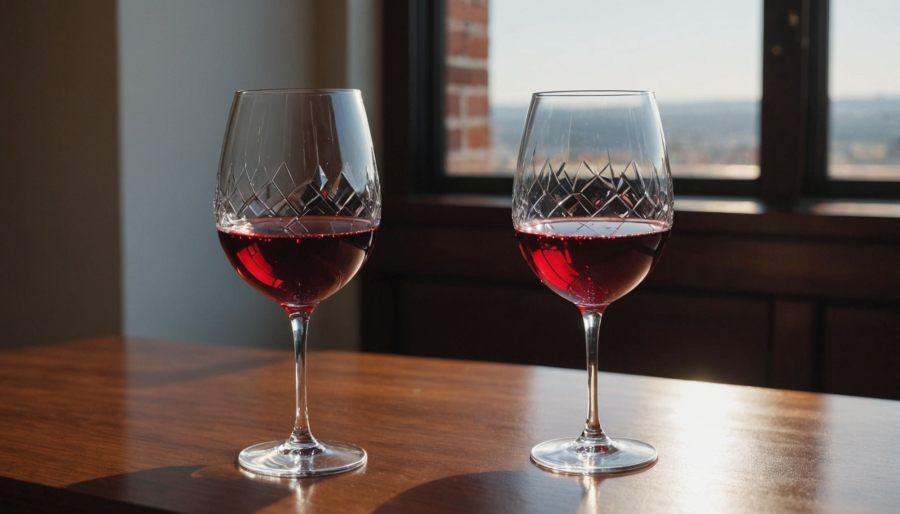
Direct comparison: Crystal vs. Glass performance
Visual clarity and light refraction
Standard soda-lime glass, commonly used in everyday tableware, tends to carry a faint green or blue tint, particularly at the base or edges. This impurity results from iron content in the raw materials. In contrast, premium crystal achieves near-total color neutrality through refined ingredient selection and manufacturing. The effect? A pristine transparency that lets the wine’s hue shine without distortion-essential for both visual appreciation and accurate tasting notes. The difference becomes especially evident in candlelit settings, where crystal dances with ambient light.
Tactile experience and rim thickness
The strength imparted by mineral content allows crystal to be mouth-blown into remarkably thin profiles without sacrificing durability. This translates to a rim so fine it dissolves on the lip, letting wine flow smoothly onto the palate. In contrast, standard glassware often features thicker, more pronounced rims that can interfere with subtle flavor nuances. The tactile refinement of crystal enhances the overall sensory experience, aligning with how sommeliers prefer to serve fine vintages.
| Feature | Standard Glass | Crystal Glass |
|---|---|---|
| Composition | Soda-lime (iron impurities) | Mineral-enhanced (lead or lead-free) |
| Clarity | Slight green/blue tint | Colorless, brilliant transparency |
| Thickness potential | Limited by fragility | Extremely thin, delicate rims |
| Sound | Dull "clunk" | Clear, resonant "ring" |
| Average durability | High (resistant to thermal shock) | Moderate (sensitive to impacts and detergents) |
Functionality and long-term care for your collection
Durability and shine retention
Despite its delicate feel, crystal is surprisingly resilient under proper conditions. However, it demands thoughtful maintenance. Unlike standard glass, which tolerates dishwashers and abrasive detergents, crystal is more porous at a microscopic level. Harsh chemicals or prolonged exposure to high heat can gradually cloud its surface, dulling its signature sparkle. Handwashing in lukewarm water with a mild detergent is strongly advised. Even the drying process matters: use a lint-free cloth to avoid micro-scratches. With care, a set of crystal glasses can remain flawless for generations-passing down both beauty and tradition.
Versatility across different stemware types
Not all crystal glasses are created equal. Red wine glasses, with their larger bowls, benefit from crystal’s ability to capture complex aromas, while flutes for champagne exploit its resistance to micro-bubbling collapse-preserving effervescence longer. White wine glasses, often smaller, use crystal’s thinness to deliver cooler liquid smoothly to the front of the palate. Each shape, when crafted in crystal, becomes a tailored instrument for flavor delivery, reinforcing the idea that the right glass isn't a vessel-it's part of the wine itself.
Lead-free crystal innovations
Modern manufacturing has redefined luxury with lead-free crystal formulations. By using barium oxide, zinc, or potassium instead, producers achieve the same optical density and resonance without traditional lead content. These innovations meet evolving safety standards without compromising elegance. Today’s discerning host can enjoy all the brilliance and acoustic qualities of crystal with peace of mind-ideal for everyday elegance or households with children. The evolution of materials underscores that tradition and innovation aren’t mutually exclusive; they can elevate each other.
- Handwashing preserves crystal's long-term luster
- Lead-free options offer premium feel with modern safety
- Different shapes optimize wine’s aroma and temperature
Choosing the right glass for your lifestyle
The case for everyday glassware
Let’s be honest: not every evening calls for caviar and candlelight. For large gatherings, casual outdoor meals, or households with energetic children, standard glass offers a practical advantage. It’s more resistant to thermal shock and mechanical stress, making it dishwasher-safe and cost-effective. While it lacks the luminosity and finesse of crystal, its durability makes it a sensible choice for relaxed settings. The key is intention-matching the vessel to the occasion, not defaulting to one across all contexts.
Investing in elegant tableware for hosting
When the moment calls for something more-be it a milestone dinner or a holiday celebration-crystal speaks a different language. It signals care, attention to detail, and a commitment to the full sensory arc of dining. A beautifully set table with handcrafted crystal enhances not just the wine, but the conversation, the atmosphere, the memory. It’s less about formality and more about presence. The return on investment isn’t measured in resale value, but in the subtle joy it brings each time it’s used. Brevity, elegance, and timelessness-this is what endures.
- Everyday glass excels in resilience and ease of care
- Crystal elevates special moments with sensory refinement
- Choosing by occasion ensures both practicality and impact
Essential Questions
Is it possible to put handcrafted crystal in a modern dishwasher?
While some modern crystal is labeled as dishwasher-safe, handwashing remains the safest method. High water temperatures and aggressive detergents can gradually cloud the surface and weaken delicate stems over time, diminishing both clarity and longevity.
I am starting my first collection: should I buy all-purpose glasses first?
Starting with all-purpose crystal glasses is a practical approach. They offer versatility for both red and white wines, allowing you to experience the material's qualities before investing in specialized shapes like flutes or dessert glasses.
How do I tell if a vintage thrift find is real crystal or just heavy glass?
Two quick tests: tap the rim gently-if it produces a clear, lingering ring, it’s likely crystal. Also, hold it to the light; genuine crystal refracts light into subtle rainbow patterns, whereas heavy glass remains visually flat.
